
On October 13, the Bolivian congress approved a new law to protect the contested TIPNIS indigenous territory and national park, temporary halting construction of the planned highway. However, TIPNIS marchers, who are expected to arrive in La Paz next week after a two-month march on foot from the lowlands, reject the legislation, particularly because its article about indigenous consultation on the road is non-binding. Beyond a last ditch appeasement to protestors, the law’s passage provides potential insights into dynamics and opposing stances within the MAS administration. Morales has yet to ratify the legislation, and continues to reject that consultation with indigenous peoples within TIPNIS should be made binding.
Contents of the law
The law reiterates the previous legal stipulations that TIPNIS is a protected ecological and indigenous territory. The law also includes stipulations for development plans and research agendas for alternative routes. It only calls to halt construction on the stretch of the road through TIPNIS; work on the other two sections continues on schedule. If the government fails to accept an alternative route in the near future, both ends of the road will eventually arrive at the border of TIPNIS, making rerouting even less likely.
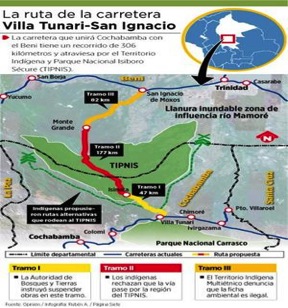
Figure 1-Map of the different branches of the road. “Tramo II” is the only halted branch. Source: Pagina Siete.
Law provides insight into internal MAS dynamics
The new law fails to satisfy demands for consultation of indigenous peoples. Morales has already lost credibility due to poor handling of the TIPNIS conflict and without significant concessions, his popularity will likely continue to decline.
Although the law itself covers no new territory, its reiteration of constitutional and legal guarantees by MAS’s absolute legislative majority demonstrates their rejection or Morales’s continued insistence on construction through TIPNIS. The president’s refusal to sign the law or protracted delay in its ratification would only further erode his already crippled legitimacy on environmental and indigenous issues. Yet, Morales is still unwilling to modify his position. On October 13, he stated,
“They want the consultation to be binding. That’s impossible; it’s nonnegotiable. The constitution and international law mandate previous consultation, and we will always respect that, but letting a group of families tell us what to do would mean paralyzing all our work on electrification, hydrocarbons and industries.”[i]
Within this framework the new law appears to be more a congressional expression of discontent with the executive, a symbolic apology to their constituents. This new legislative mandate will further highlight the contradiction in Morales’s stance and his unwillingness to sign it would further erode his credibility and heighten criticisms that he does not respond to legislative oversight, which could be damaging on the eve of judicial elections.
[i] Los Tiempos, “Sanción de ley corta molesta a los indígenas,” 14 Oct 2011. Morales: “Nos piden que la consulta tenga carácter vinculante. Es imposible. No se puede negociar. Las consultas previas, las consultas siempre están garantizadas por la Constitución y por las normas internacionales. Siempre vamos a respetar, pero que un grupo de familias nos diga que no se haga significa paralizar todas nuestras obras en el sector eléctrico, en el sector hidrocarburífero, nuestras industrias”